November eNews
Welcome to the November eNews.
From groundbreaking discoveries in life sciences and mental health to fascinating insights into history, biology and the origins of the universe, we have another newsletter full of exciting research.
In this edition, explore our Top 5 most-read stories, discover our Editor's Choice on how humans and songbirds perceive sound differently, and take a look at our Image of the Month, highlighting a new theory about the origins of the universe.
If you would like to get in touch with the News Team, please email news@alphagalileo.org
All the best,
AlphaGalileo News Team
Top 5 from October
1. Philippine Studies: Historical and Ethnographic Viewpoints Vol. 74, No. 3 (September 2026), published by Ateneo de Manila UniversityAteneo de Manila University on 5 October 2026
Philippine Studies: Historical and Ethnographic Viewpoints has just published its latest issue, The Limits of Liberalism.
Read the news
2. From the Origins of Life to the Rhythms of the Ocean: HFSP Science Digest #5 Explores New Frontiers in Life Sciences, published by Human Frontier Science Program (HFSPO) on 12 October 2026
How did life begin on Earth? Can plants adapt to a changing climate? What can the rhythmic abilities of aquatic mammals reveal about the evolution of communication? These are among the questions explored in HFSP Science Digest #5, published today by the International Human Frontier Science Program Organization (HFSPO).
Read the news
3. The Oldest Church in the Venetian Area Unearthed at Altino by Ca' Foscari University Archaeologists, published by Ca' Foscari University of Venice on 21 October 2026
Ca’ Foscari University of Venice’s 2026 excavations at the Altino Archaeological Park have identified what is most likely the city’s episcopal church and bishop’s palace. It is the oldest church yet documented archaeologically in the Venetian area, shedding new light on Altino’s long history and the origins of settlements in the Venetian Lagoon
Read the news
4. Europe faces a psychiatric innovation crisis: ECNP launches the multistakeholder initiative EU-MIC to deliver better treatments for millions, published by The European College of Neuropsychopharmacology (ECNP) on 7 October 2026
The European College of Neuropsychopharmacology (ECNP), together with people with lived experiences, learned societies, and other stakeholders, today announced the advance press launch of the European Coalition for Mental Health Medicines Innovation (EU-MIC), a major multi-stakeholder initiative designed to address Europe’s growing psychiatric innovation gap and ensure that patients gain equitable access to innovative, effective and safe treatment. EU-MIC will be officially launched to the mental health community at the ECNP congress on Saturday 10th October.
Read the news
5. Skin has a sex: females and males do not renew their skin in the same way, published by Université libre de Bruxelles (ULB) on 14 October 2026
Published in Nature: by filming skin stem cells in living mice over five months, researchers at the Université libre de Bruxelles (ULB), in collaboration with the University of Cambridge, have discovered that in females these cells renew the skin in a more coordinated way than in males. This difference, controlled by sex hormones, goes hand in hand with faster wound healing in female mice. This research could eventually pave the way for future personalized treatments taking into account patients' sex.
Read the news
Editor's Choice
Humans and songbirds hear the same sounds, but organize them differently, published by Universiteit van Amsterdam (UVA) on 13th October 2026
Researchers from the University of Amsterdam and Leiden University have discovered that humans and songbirds use markedly different strategies to recognize sequences of complex sounds. The findings shed new light on how biology and experience shape the way we perceive complex sounds, with implications for music and speech.
Read the item here
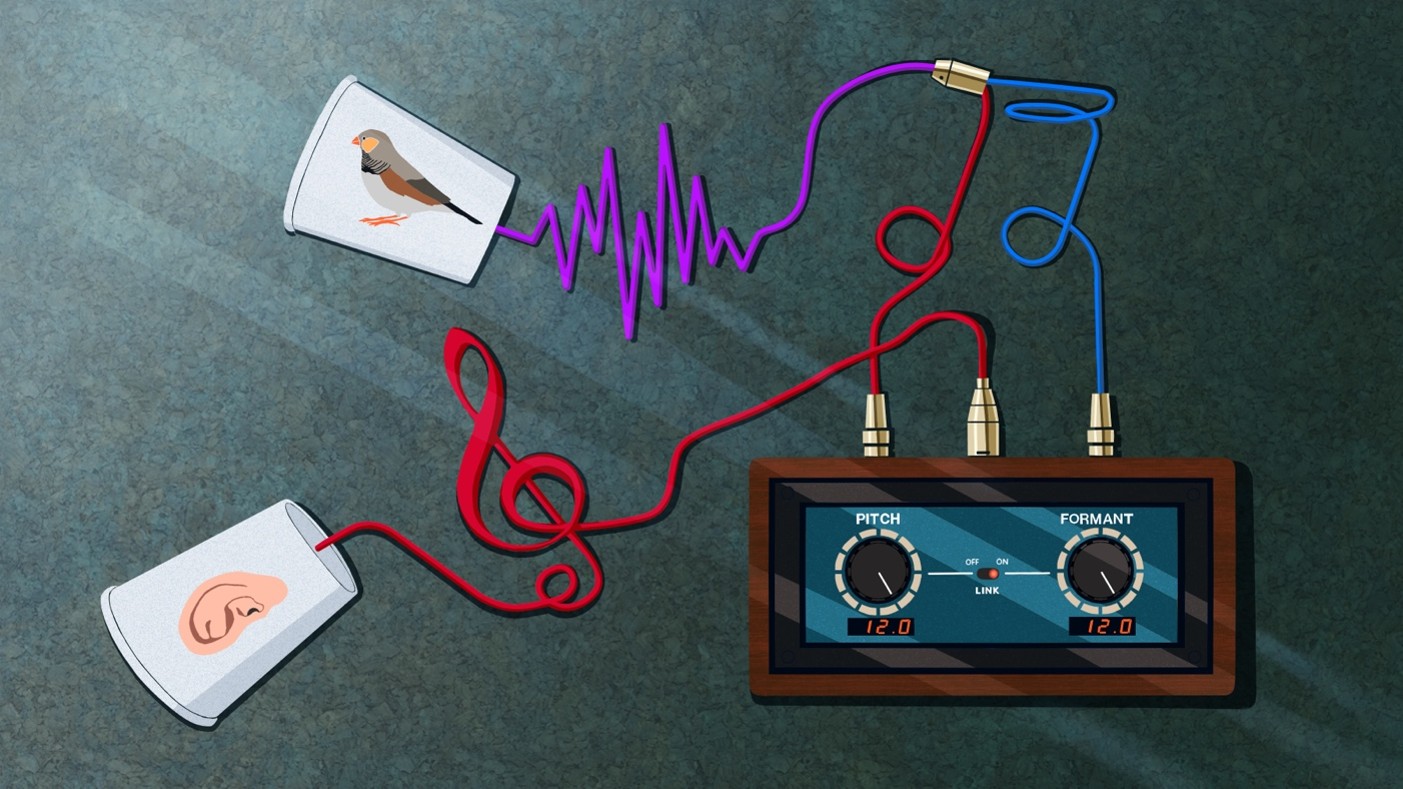
Image caption: Illustrated by Zi-Yang Ning. Used under CC BY 4.
Image of the month
Forgotten particle could answer mystery of why we exist, say physicists, published by University of Southampton on 15th October 2026
Scientists have unveiled a new theory on the birth of the cosmos, suggesting the early universe was shaped by an ancient particle that has been overlooked for decades.
Their research tackles one of the greatest conundrums in modern physics – how matter triumphed over antimatter in the aftermath of the Big Bang.
According to current theories, both should have annihilated each other after a colossal explosion, leaving nothing but an empty universe of pure energy.
But physicists at the University of Southampton and the Indian Institute of Technology Kanpur say they found a clue in a neutrino, one of the lightest particles in the universe.
Read the news
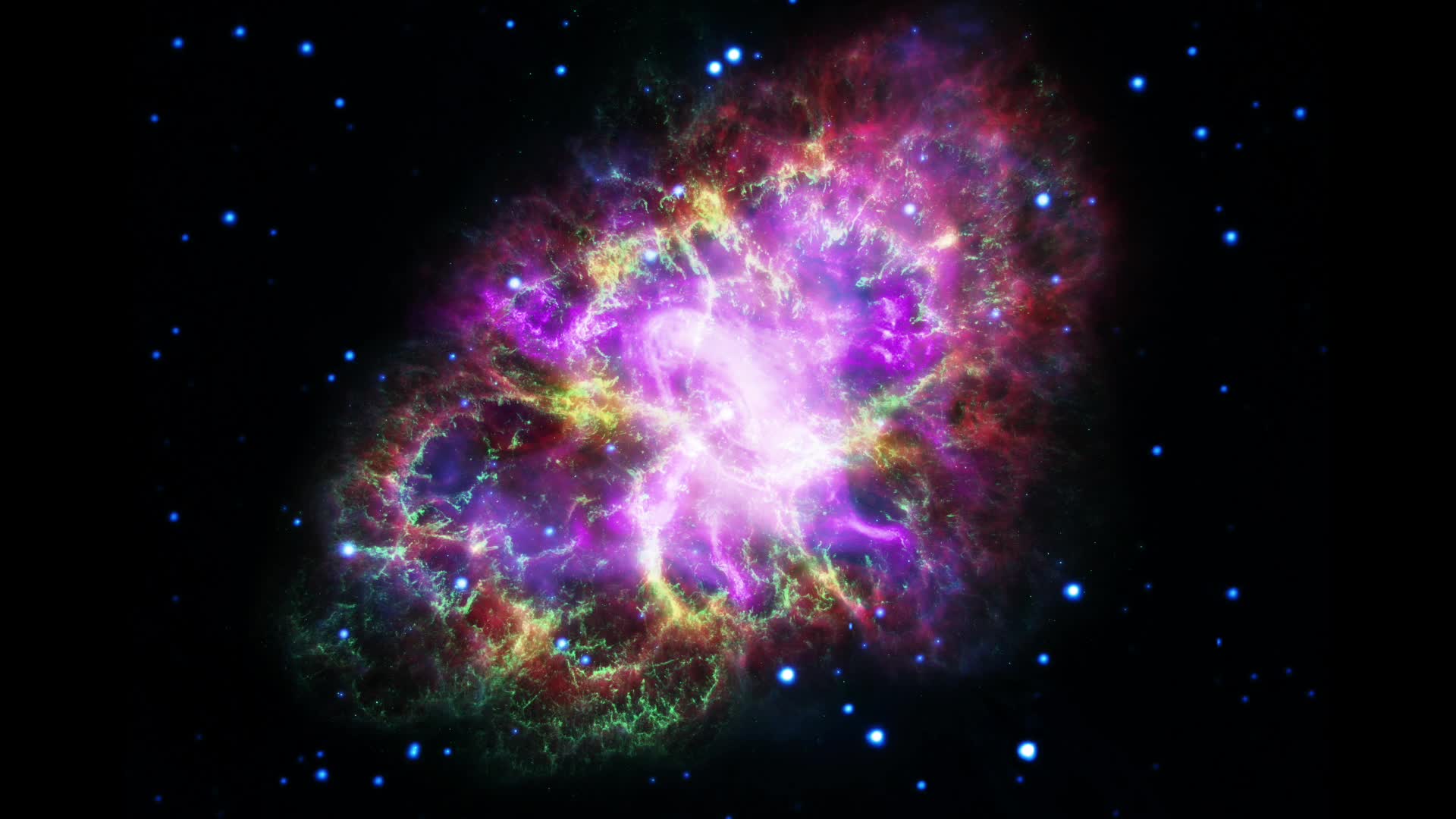
Image caption: Crab Nebula in the Taurus constellation - credit NASA, ESA, J DePasquale (STScI)