October eNews
Welcome to this month's enews which focuses on research that spans the science of healthy ageing, wellbeing, brain function and resilience. From AI-driven approaches to biological age reversal and the effects of remote working on activity and sleep, to new insights into how the brain processes information and responds to trauma, highlighting the rapidly evolving connections between health, behaviour and technology.
We also showcase a striking new map of lipids across the brain, offering a fresh perspective on its complex biology.
If you would like to get in touch with the News Team, please email news@alphagalileo.org
All the best,
AlphaGalileo News Team
Top 5
1. Remote work increases sleep and reduces physical activity—sedentary behaviour can increase by 45 minutes, published by the University of Turku on 11/09
According to a Finnish study, people sleep slightly longer when they work from home. However, they also sit more and are less physically active than on days when they work in the office.
Read the news
2. Nature Biotechnology | Insilico’s AI-Driven IPF Candidate Rentosertib Shows Potential for Biological Age Reversal, as Assessed by Six Proteomic Aging Clocks, published by Insilico Medicine on 07/09
First-in-Class Evaluation of an AI-Driven Candidate: This is the first de-novo drug designed with generative AI for a de-novo target discovered using AI and Aging Research (AI aging clocks, AI models and Hallmarks of Aging Assessment) .
First Universal Consensus Across Six Independently-Developed Proteomic Aging Clocks: Analyzing 12-week longitudinal Olink proteomic data from 42 IPF patients, six aging clock models (including ProtAge, OrganAge, and PAC) independently developed by the leading groups from Harvard, Oxford, PKU, and Insilico, unanimously indicated that rentosertib reversed predicted biological age.
First Scalable Blueprint for Dual-Purpose Clinical Trials: The study is the first demonstration of a novel drug for a novel target discovered using aging research purposed to the age-related disease with aging biomarkers applied in a context of a clinical study. It establishes a standardized framework for embedding geroscience endpoints into standard disease trials, aligned with FDA Biomarker/BEST guidelines for dual-purpose aging and disease therapeutics.
Read the news
3. Psychological flexibility correlates with performance and wellbeing in athletes, published by Karlstad University on 21/09
Psychological flexibility plays an important role in both performance and wellbeing. This is the conclusion of a doctoral thesis by Lis Johles, which examined the relationship between psychological flexibility, mindfulness, mental health and performance among competitive athletes.
Read the news
4. When Generative AI Meets Geroscience: Insilico Medicine Decodes Landmark Biological Age Reversal Study at Nature AI Conference, published by Insilico Medicine on 15/09
Following the publication of its latest study in Nature Biotechnology, Insilico Medicine founder and CEO Alex Zhavoronkov, Ph.D., took the stage at Sorbonne University during the Nature AI Conference on Redefining Healthcare in the Age of AI to deliver a detailed presentation of the breakthrough findings.
Addressing an audience of global research leaders, clinical investigators, and biopharma innovators, Zhavoronkov detailed how the company’s AI-driven novel drug candidate, rentosertib (ISM001-055), achieved a unanimous reversal of biological age across six independent proteomic aging clocks in a Phase IIa clinical trial.
Read the news
5. New Findings on Information Processing in the Brain - International research team discovers narrowings in the tube-shaped extensions of nerve cells, published by the University Hospital of Bonn on 14/09
Neurons receive thousands of signals via tree-like extensions called dendrites. Until now, these dendrites were thought to be relatively smooth cables that conduct electrical signals to the cell body. An international research team led by the University Hospital of Bonn (UKB), the University of Bonn, and the DZNE has now determined that this picture is incomplete. Using various advanced microscopy techniques, it has identified tiny, previously overlooked constrictions along the dendrites. These newly discovered structures, which the researchers call dendritic shaft constrictions, are only a few hundred nanometers wide – about 500 to 1,000 times thinner than a human hair – and occur in various types of neurons in both mouse and human brains. The study results have now been published in the journal Science Advances.
Read the news
News Team's Choice
How the Brain Responds to Positive Emotions Is Key to Resilience After Trauma, World Trade Center Responder Research Shows - 10/09/2026 - Elsevier
New research has uncovered that how the brain responds to anticipated rewards plays a key role in building psychological resilience after a traumatic experience. The findings from the new study among 9/11 responders, appearing in Biological Psychiatry: Cognitive Neuroscience and Neuroimaging, published by Elsevier, support the premise that the capacity to notice and respond to positive information in the environment may buffer the negative effects of substantial trauma exposure.
Read the news
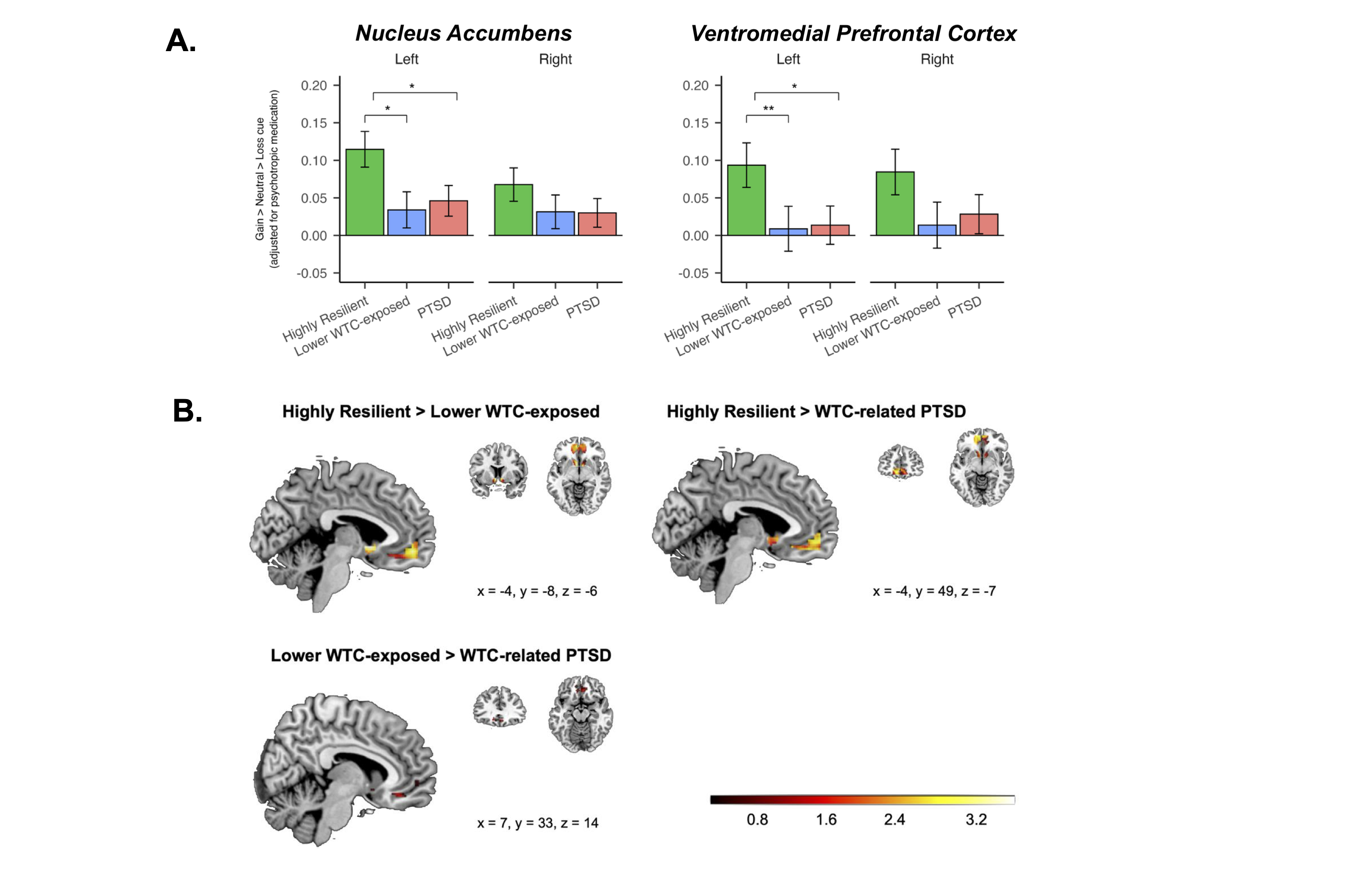
Image caption: Panel A. Greater left NAcc and left vmPFC response to anticipating a potential monetary reward (Gain > Neutral > Loss, adjusted for psychotropic medication use) in Highly Resilient WTC responders, compared to both Lower WTC-exposed and PTSD groups. L=left, R=right, NAcc=nucleus accumbens, vmPFC=ventromedial prefrontal cortex. Unlabeled group comparisons all p>.06. Panel B. Unthresholded group comparison T maps (Gain > Neutral > Loss, adjusted for psychotropic medication use) masked by ventromedial prefrontal cortex and nucleus accumbens regions of interest. (Credit: Biological Psychiatry: Cognitive Neuroscience and Neuroimaging / Seeley et al.)
Image of the month
The first map of lipids in the mouse brain, published by Ecole Polytechnique Federale de Lausanne (EPFL) on 23/09/2026
The brain is often described in terms of cells and wiring. However, much of it is made of lipids that form the membranes of neurons, wrap nerve fibers with myelin, and help brain cells send and receive signals.
Despite their importance, lipids have been a blind spot in neuroscience. Unlike genes and proteins, which have been mapped in detail standard imaging methods struggle to distinguish between lipid molecules.
“So scientists have had only a blurry picture of how lipids differ from one part of the brain to another,” says Giovanni D’Angelo, professor at The Kristian Gerhard Jebsen Foundation Chair in Nutrition and Metabolism at EPFL. “That gap matters, because changes in brain lipids are increasingly linked to conditions from depression to Alzheimer’s disease.”
Now, a team of scientists led by D’Angelo, Luca Fusar Bassini, and Gioele La Manno at EPFL has built a detailed atlas of lipids across the entire mouse brain. The Lipid Brain Atlas shows that these molecules follow a precise, orderly pattern that lines up with the brain’s known anatomy and reveals boundaries that anatomy alone has missed. The pattern is so distinctive that, from the lipids alone, the team could tell where in the brain a piece of tissue came from.
Read the news
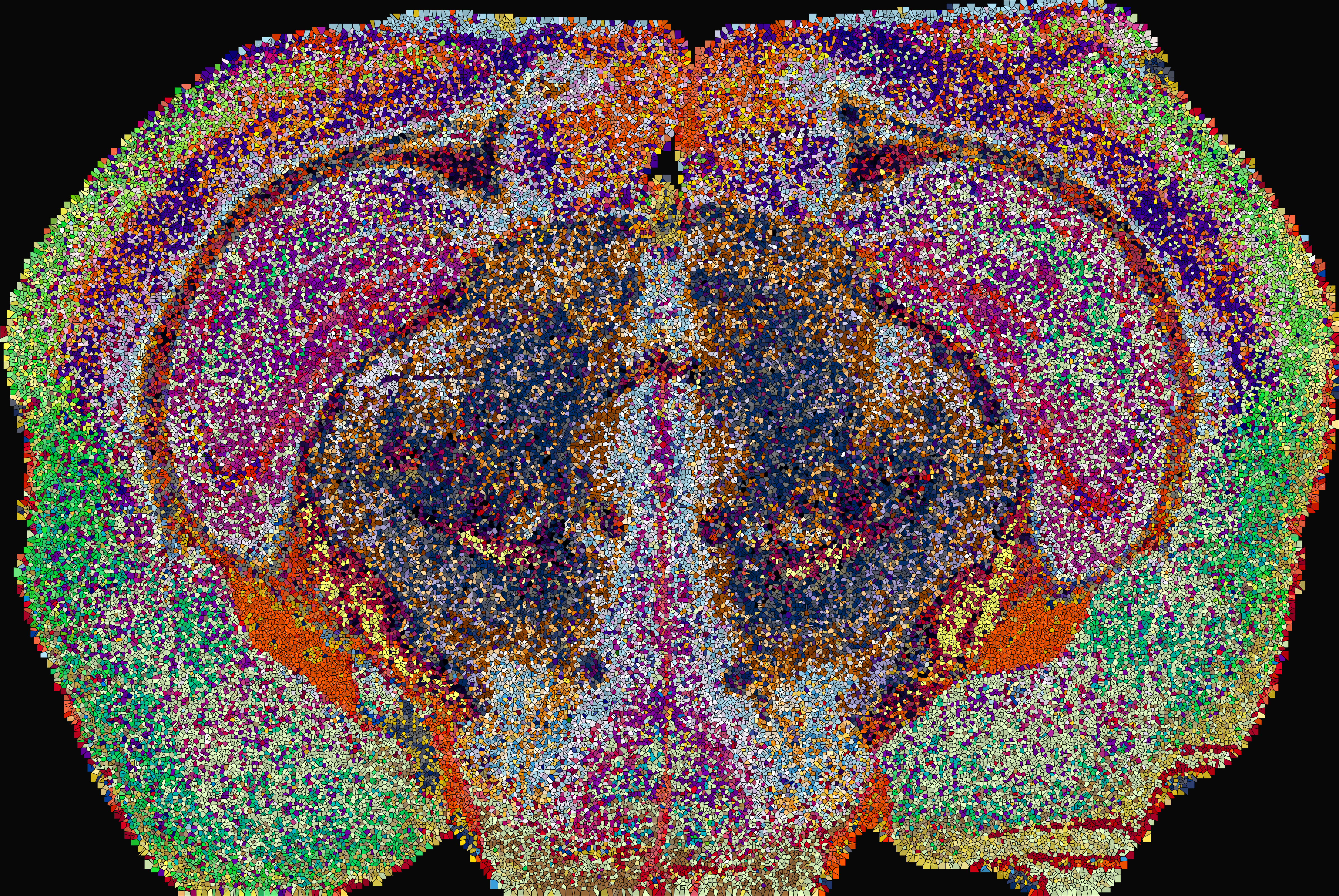
Image caption: Lipizones in the mouse brain, determined by MALDI-MSI. Dots are enlarged for visualization purposes. Credit: 2026 EPFL/Luca Fusar Bassini - CC-BY-SA 4.0