June eNews
From smarter cancer treatments to the search for life beyond Earth, this month’s eNews highlights research developing new ways to cut off cancer’s energy supply, improving how we design next-generation technologies, and finding practical routes to scale up more efficient solar power.
Alongside these advances, big questions continue to inspire new thinking. Could we be missing signs of life in space? And how might DNA “fingerprints” help shape more personalised approaches to mental health care? With a new open-access journal also expanding access to planetary science, there’s plenty to explore in this month’s round-up.
If you would like to get in touch with the News Team, please email news@alphagalileo.org
All the best,
AlphaGalileo News Team
Top 5
1. A Dual Metabolic Strike: Copper-Based Nano-PROTACs Strengthen Cuproptosis Cancer Therapy, published on 09 May by Science and Technology Review Publishing House
What happens if cancer cells lose both their mitochondrial energy supply and their glycolytic backup system? This question is central to a new study published in Research by researchers from Northwestern Polytechnical University and collaborating institutions. The work addresses a key limitation of cuproptosis-based cancer therapy: copper-dependent mitochondrial stress can kill cancer cells, but many tumors are metabolically flexible and rely heavily on aerobic glycolysis to survive mitochondrial damage. The study proposes a way to block both routes at once.
Read the full item news
2. Planet: A New Open-Access Journal in Planetary Science Now Open for Global Submissions, published on 14 May by HEP Journals
Planet (ISSN 2097-566X) is a new, fully open-access, peer-reviewed journal covering the full scope of planetary science. Co-published by Chengdu University of Technology and Higher Education Press (HEP) since September 2025, the journal has already published 10 peer-reviewed original articles and accumulated over 14,000 downloads worldwide. It was recently listed as a Tier 2 journal in the Catalogue of Chinese High-Quality Science and Technology Journals (April 2026), and is indexed by Google Scholar and NASA ADS.
Read the full item
3. Full-chip EUV Curvilinear Mask Optimization, published on 12 May by TranSpread
Prof. Shiyuan Liu's team from Huazhong University of Science and Technology has reported a full-chip EUV curvilinear mask optimization framework that integrates deep learning with gradient-based inverse optimization. This framework achieves an estimated speedup of four orders of magnitude over conventional FDTD methods while preserving accuracy, thereby enabling full-chip EUV mask optimization within a practical runtime. Doctoral student Pinxuan He is the first author of this paper, and Prof. Shiyuan Liu and Dr. Jiamin Liu are the co-corresponding authors. Prof. Honggang Gu, Dr. Song Zhang, Prof. Qi Xia, and Prof. Hao Jiang also contributed to this research.
Read the full item
4. Scalable Manufacturing of Perovskite Photovoltaics, published on 19 May by Karlsruhe Institute of Technology
Solar energy is a cornerstone of the energy transition. Tandem solar cells made of perovskite and silicon can achieve higher efficiencies than conventional silicon cells, but their industrial manufacturing remains a challenge. Researchers at Karlsruhe Institute of Technology (KIT) and the University of Valencia have now jointly further developed a fast, solvent-free vacuum process that uniformly deposits perovskite layers at high throughput, even on textured silicon surfaces. Results published in Nature Energy. (DOI: 10.1038/s41560-026-02068-9)
Read the full item
5. DNA “fingerprints” offer new answers to mental disorders, published on 18 May by the University of Bergen
Two new studies show that chemical marks on DNA, shaped by both our genes and life experiences, can help explain obsessive-compulsive disorder and bipolar disorder. The findings move psychiatric research closer to more precise, personalized treatment, with epigenetic-based scores showing early promise as additions to genetic scores.
Read the full item
News Team's Choice
Have We Been Missing Signs of Extraterrestrial Life? Researchers Warn of “False Negatives” in the Search for Biosignatures in Space, published on 28 May by Freie Universitaet Berlin
How likely is it that signs of extraterrestrial life are already out there, but we have simply not yet been able to detect them? An international research team has taken on this question in a study recently published in the scientific journal Nature Astronomy. The researchers analyzed the phenomenon of “false negatives,” cases in which evidence of biological activity in space is overlooked or incorrectly interpreted. Researchers from Freie Universität Berlin were involved in the study alongside other experts in the fields of planetary sciences and astrobiology.
Read the full item
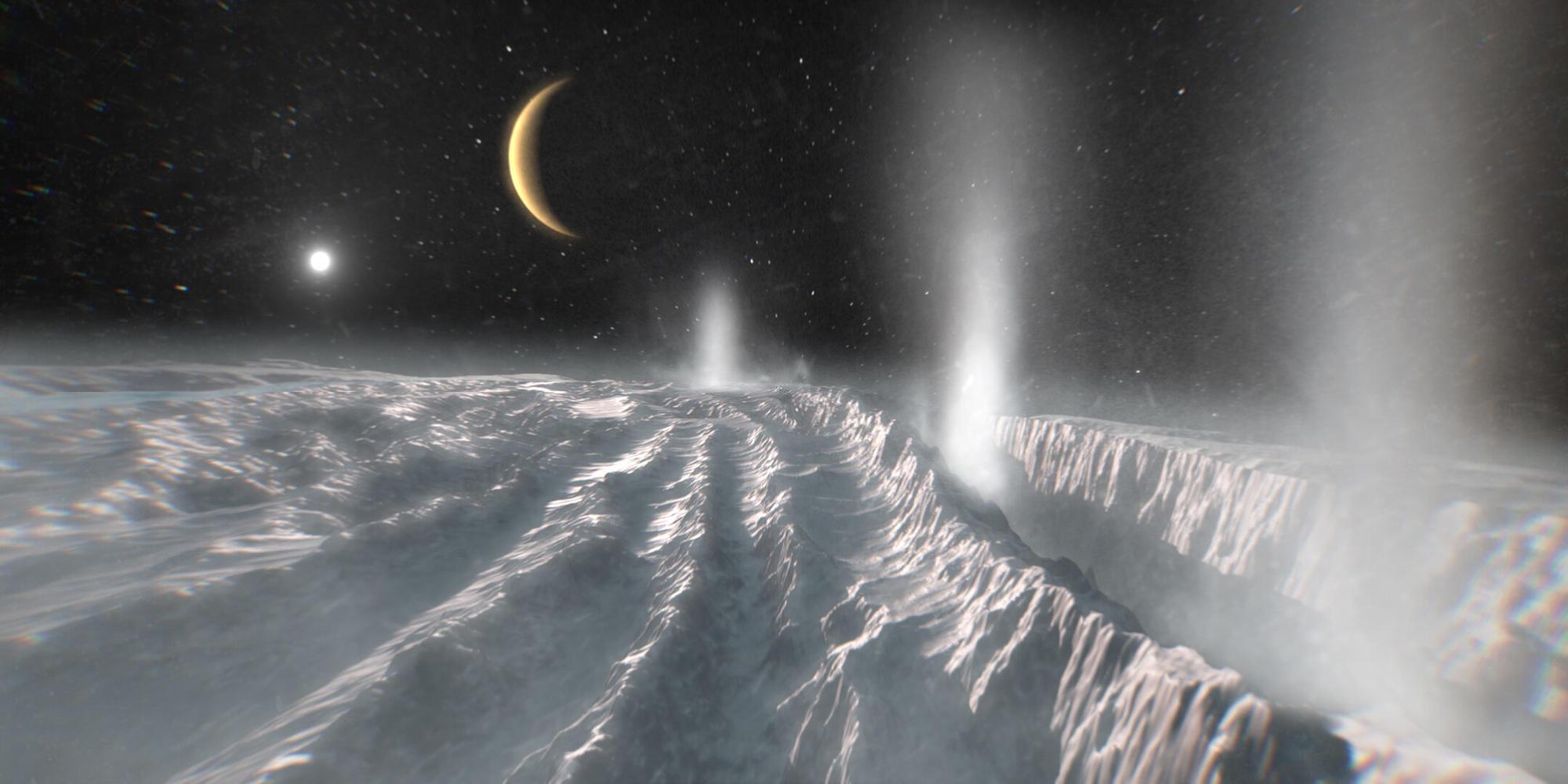
Image caption: Artist’s impression of cryovolcanism on Enceladus, an icy moon of Saturn.Image Credit: ESA/Science Office
Image of the month
A colorful and diverse garden brings joy to any gardener, but the increased popularity of non-native plants in place of native species has brought about unprecedented changes in the local wildlife, published on 19 May by Osaka Metropolitan University
The Fischer’s Blue, Tongeia fischeri (T. fischeri), is a near-threatened butterfly species in Japan that has been reported to use both native and non-native plant species as hosts. Wing coloration is known to function as an important visual signal in butterfly mating behavior and has been theorized to vary depending on the host plant species they fed on during the larval stage. However, this hypothesis had not been tested previously in this species.
Read the full item

Image caption: Fischer’s Blue butterfly: Threatened Tongeia fischeri species on native Orostachys japonica (Japanese Dunce Cap) flower.