May eNews
Welcome to this month's eNews.
Top 5
1. Tiny flow chips, faster clean catalysis, published on 1/04/26 by TranSpread
Catalytic treatment of industrial pollutants has long faced a practical bottleneck. Noble metal nanoparticles are highly active, but they often tend to aggregate, reducing the number of active usable reaction sites. Traditional methods for producing polymer-supported catalysts can also be slow, multistep, and dependent on toxic reagents, surfactants, or poorly controlled batch conditions. Meanwhile, 4-nitrophenol remains a hazardous pollutant commonly found in industrial wastewater, and existing catalytic systems often suffer from limited surface area, uneven active-species distribution, and inefficient mass transfer. Based on these challenges, in-depth research is needed on controllable catalyst supports and continuous-flow catalytic platforms.
Read the news
2. Philippine Studies: Historical and Ethnographic Viewpoints Vol. 74, No. 1, March 2026, published on 1/04/26 by Ateneo de Manila University
Philippine Studies: Historical and Ethnographic Viewpoints has launched its latest issue, Volume 74, Number 1 (2026), a special issue titled Under Imperial Japan, now available on the Archīum. This new issue brings together an editor’s introduction by Michael D. Pante, three substantial articles on the wartime Philippines—examining Jose P. Laurel and the 1943 Assembly of the Greater East-Asiatic Nations, the remaking of Rizal in wartime propaganda and national identity, and the atrocities committed by the Oie Butai in Negros Oriental in 1944–1945—as well as a rich set of commentaries honoring the life and scholarship of anthropologist Raul Pertierra through reflections on his writings, influence, and legacy.
Read the news
3. Nestlé and NTU Singapore partner to advance research on healthy longevity and women’s health, published on 20/04/26 by Nanyang Technological University, Singapore (NTU Singapore)
Nestlé and Nanyang Technological University, Singapore (NTU Singapore) today announced a multi-year joint research partnership to advance the scientific understanding of how nutrition supports healthy longevity and women’s health.
Read the news
4. New ant supergene reveals surprising twist in evolution of social behavior, published on 20/04/26 by the University of Oulu
In the spring ants are once again hard at work. Beyond their everyday presence, ants are also key model organisms in cutting-edge evolutionary genetics research, helping scientists understand how social behavior and cooperation evolve.
Read the news
5. About to emerge: One of the world’s most advanced laboratories, published on 15/04/26 by SINTEF
Concrete has never had to meet such high standards. Deviations cannot exceed millimetre level. Even the curvature of the Earth must be taken into account in building the world’s most advanced laboratories.
Read the news
Editor's Choice
Do You Trust Me? A Framework For Making Networks of Robots and Vehicles Safer, published on 02/04/2026 by Harvard School of Engineering and Applied Sciences
From birds flying in formation to students working on a group project, the functioning of a group requires not only coordination and communication but also trust — each member must be confident in the others. The same is true for networks of connected machines, which are rapidly gaining momentum in our modern world – from self-driving rideshare fleets, to smart power grids. Harvard computer scientists, together with a multi-university team that includes information theorists and experts in wireless communications, optimization theory, machine learning, and robotics, are presenting their vision for incorporating the concept of trust into emerging cyber-physical systems.
Read the news

Image caption: An illustration of how adversarial agents could misreport sensor readings or spoof data to strategically alter the behavior of connected vehicle fleets.
Image of the month
More than two species? Scientists challenge taxonomy of two-toed sloths in Amazonia, published by 27/04/2026 on Forschungsverbund Berlin e.V. (FVB)
A new study by scientists from the Leibniz Institute for Zoo and Wildlife Research (Leibniz-IZW), has revealed significant cryptic diversity within two-toed sloths (Choloepus) in Amazonia, challenging the long-established taxonomy of the genus. This international effort involved key South American collaborators. Utilizing the first genome-wide dataset from multiple two-toed sloth populations, the study published in the journal “Molecular Phylogenetics and Evolution” provides critical new evidence that past environmental changes shaped the sloths’ evolutionary history, and highlights an urgent need for taxonomic revision and updated conservation assessment and strategies.
Read the news
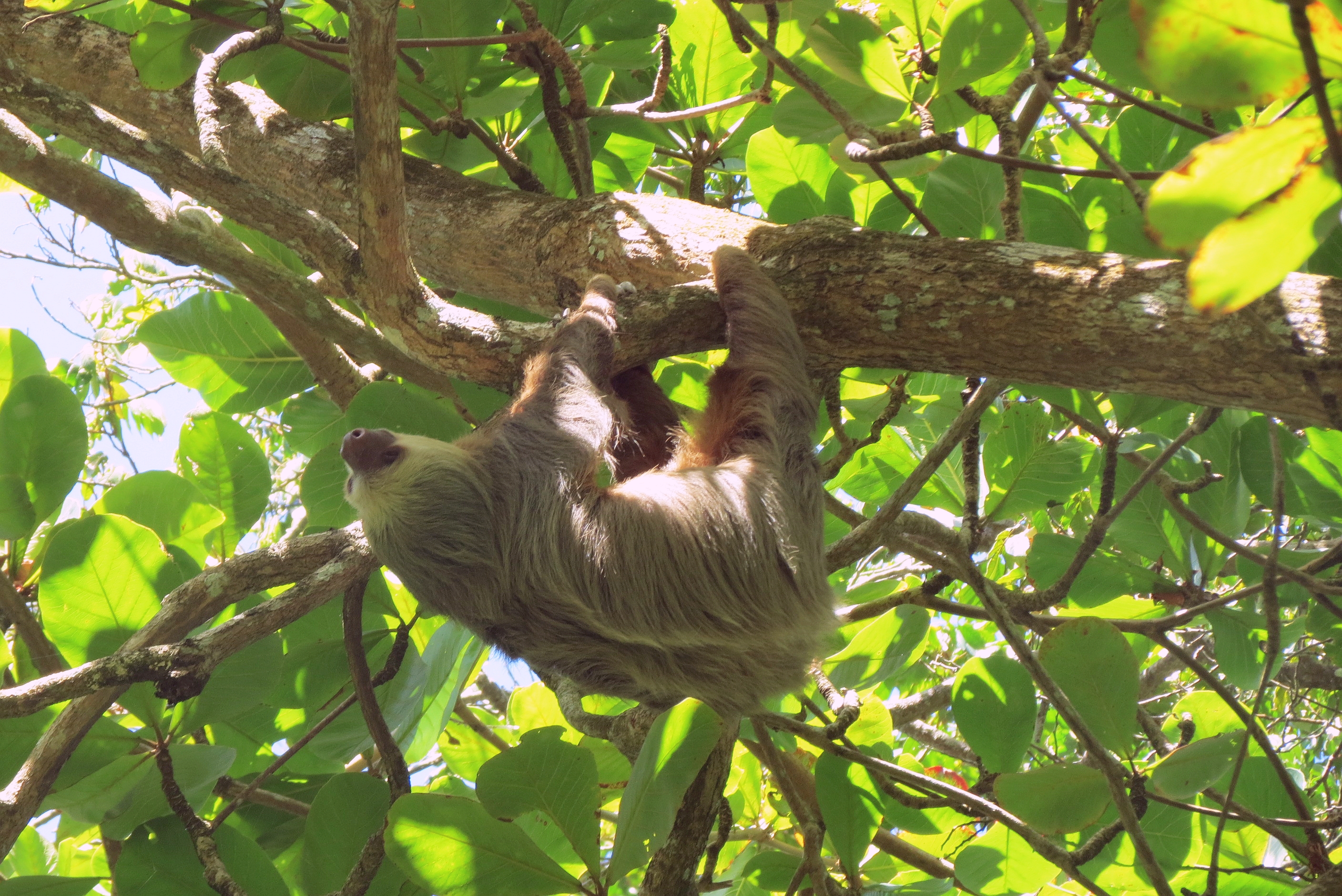
Image caption: Hoffmann's two-toed sloth (photo by Camila Mazzoni)